VerisAI launch note
Why I Built VerisAI: Turning Operational Experience Into Business Systems
Paul Gavshon explains why he founded VerisAI, why hospitality is the first proving ground and how AI can help teams turn operating signals into accountable action.
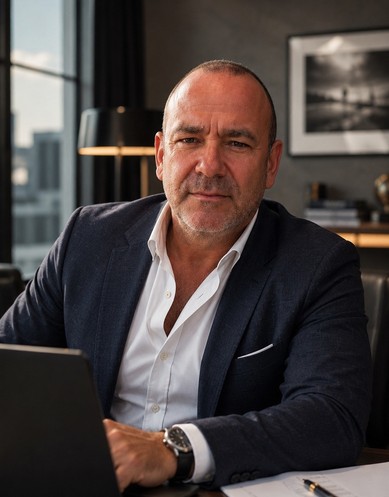
I did not come to business systems from a software laboratory. I came to them from kitchens, hotels, restaurants, accommodation, facilities and large remote operations where the same truth appears every day: a problem is only useful when somebody can see it, own it and verify what happened next.
That is why I founded VerisAI. The goal is not to add another dashboard or ask artificial intelligence to make unchecked decisions. The goal is to turn scattered operating signals into a clear decision trail: what changed, what evidence supports it, who has authority, what action was agreed and how the result will be verified.
Who is Paul Gavshon?
I am an operator first. My career began in professional kitchens in 1994 and moved through international hospitality, hotel and multi-venue management, accommodation, facilities and remote workforce operations across Australia, Ireland, the United Kingdom and Asia. The technology is new; the operating pressures behind it are not.
The repeated failures are familiar: labour hours detached from demand, waste recorded without a cause, handovers that lose context, maintenance actions without closure, and reports that describe last month without helping the team decide what to do today.
Hospitality is the first proving ground
Hospitality is an unforgiving place to test an operational system. Demand moves quickly, margins are exposed, service happens in public and multiple departments must hand responsibility to one another throughout the day. If a control is too complicated for a busy shift, it is not ready.
The first VerisAI Ops prototype therefore focuses on a weekly hospitality control rhythm. It makes fictional sales, labour and waste signals visible, separates a mathematical scenario from a promise, keeps incomplete evidence visible and requires a human manager to approve the decision.
Open the VerisAI Ops Hospitality Edition →Use the public prototype with fictional data and generate an evidence-led decision brief.
TheWorkingGM is the systems catalogue
TheWorkingGM began with my personal operating experience. Its next stage is larger than personal guidance. It is becoming a modular catalogue of business systems for labour, margin, handovers, standards, service recovery and management rhythm.
My experience shapes the method, but the product has to belong to the team. A system should be teachable, measurable and transferable. It should survive a change of manager and work without the founder standing beside it.
Explore TheWorkingGM Business Systems →See the reusable control model and the roadmap from hospitality into other operating industries.
Where AI earns its place
AI is useful when it reduces the distance between evidence and responsible action. It can help detect a material variance, explain which inputs influenced the result, prepare a concise brief and maintain continuity across a management cycle.
It should not hide uncertainty, invent evidence or quietly take authority from the people accountable for the business. VerisAI is being designed around human approval, explicit permissions and an auditable decision trail because trust is an operating requirement, not a marketing line.
One engine, multiple industries
Hospitality is first, not final. The same operating pattern exists in retail, facilities, field service and other multi-site businesses: capture the signal, test the evidence, assign the authorised owner and verify closure. Each industry still needs its own language, thresholds, risks and workflows; the engine should not pretend every operation is identical.
What happens next
- Put the public Hospitality Edition in front of real operators and measure whether it improves decision clarity.
- Build the smallest secure data connections only after permissions and evidence requirements are defined.
- Document the VerisAI method as company-owned intellectual property rather than founder-only knowledge.
- Expand into a second industry only after the first control loop produces credible proof.
- Publish progress honestly, including limitations, instead of manufacturing traction.
I may be the new kid in SaaS, but I am not new to the operational problems the software must solve. VerisAI is the bridge between those two worlds: frontline experience converted into systems a team can actually run.